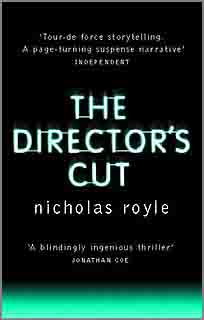
A body wrapped in coils of celluloid is discovered on a demolition site where, fifteen years earlier, four aspiring young directors had made an underground film of a man's suicide.
As a murder enquiry is opened, which of the four now has something to hide from his former associates? Harry Foxx, the frustrated arthouse director, whose only feature didn't so much get released as manage to escape; Frank, who gave up film-making to become a critic; Richard Charnock, who as a director achieved some commercial success, with a string of sexploitation quickies, and an equal measure of critical derision; or Angelo, lowly film dispatch clerk, who hears voices in static and is embarked on a lonely, obsessive search for the Museum of Lost Cinema Spaces.
'A blindingly ingenious thriller, rich in atmosphere and imbued with a deep love and knowledge of cinema. There's a command of narrative and a wealth of ideas here that most of today's writers could only dream of. A real breakthrough novel, not just for Nicholas Royle but for any readers who feel that contemporary fiction has gone stale and lost the plot'
Jonathan Coe
'As a literary thriller,
The Director's Cut joins the pantheon of novels that explore the darker aspects of cinema's fascination, dealing with memory and guilt, manipulation and death'
Chris Darke, Independent on Sunday
'Interleaving a dense knowledge of film with a darkly atmospheric feel for London's geography, Royle constructs a tense, intelligent thriller'
Matt Seaton, Esquire
'There is a cunning, playful method at work behind the novel's steady, riveting build. Each chapter, from the opener on beachcombing for amber, is a carefully cut gem... Best of all, it's built on a raft of film references, captivating in its sure search for London's lost cinemas... A success'
Omer Ali, Time Out
'A moody, ingenious thriller, designed explicitly for film addicts, which explores sex, death, dreams and disenchantment - the stuff that movies are made of'
Philip Oakes, Literary Review
'Set in a London of old cinemas "gone dark", empty exhibition halls and disused Tube stations,
The Director's Cut displays a passion for cinema and a fascination with the emotional relationships between humans and the spaces in which we exist. Nicholas Royle's narrative is masterful: every time it appears that one of several disparate strands has drifted too far from the plot, he deftly draws it into line again. A highly intelligent thriller'
Keiron Pim, Metro
'In
The Director's Cut, a body is found wrapped in a 16mm print of Nicolas Roeg's
Bad Timing on a demolition site in central London. Four friends - who, in their youth fifteen years earlier, had made an underground short of a man's suicide - are forced into radical revisions of past and present events, allegiances and intentions. This group - a film critic, a trash director, a frustrated auteur and a dispatch clerk - are extreme cinephiles. They inhabit cinema as a parallel world that colours all they do, and how things are seen. They move on the cusp between film and reality, with obsession the energising agent in their negotiations between these two, constantly blurring, states. Characters reflect and amplify each other and the Tube murders of a proposed screenplay become an actuality... Royle knows his stuff and
The Director's Cut can be read as a lucid primer on London's cinematic topography. There is real skill here in creating a framework that can hold, simultaneously, an accurate portrayal of the contemporary metropolis and a sense of the mythic possibilities both of the city and the cinema... The presiding mentor here is Nicolas Roeg... Roeg's oeuvre also underscores the atmosphere of voyeuristic intent, obsession and fecund unease that permeates the action. But Royle speaks in his own voice, and one of the chief pleasures of the book is its tour-de-force storytelling, constructed around a deeply cinematic pattern of edits - pivotal elisions, with objects and images that reroute events. Juggling a clutch of major characters, numerous plot-lines and a complex chronology,
The Director's Cut is no dry exercise but a page-turning suspense narrative... Behind the flickering surface lies an exhilarating paean to friendship and the collaborative energies of youth, pitched against an enquiry into different forms of loss... The celluloid version would work a treat - a gesture of gratitude from one medium to another for such fine, considered affection. But, in a real sense,
The Director's Cut is already part of cinema's luminous tradition, in spirit and execution. It already sits waiting to be directed by the many readers that it deserves'
Gareth Evans, Independent
'A cinematically erudite psychological thriller, which reflects London and its films in both incident and essence... Royle has produced a stylish, mordantly witty, schizophrenic mystery: his skill as a short story writer is much in evidence in the novel's vivid flashbacks, and the Fraser Munro chapters, which make an effective tale in their own right... It is a characteristic of Royle's stories that they attempt to give once-inhabited places a mysterious, paranoid significance, and it is the specific juxtaposition of factual geography with fictional events that creates such a haunting effect.
The Director's Cut also serves as an elegy for the capital's lost cinemas - those charged sites of emotional experience from years ago. Royle commemmorates a century in which cinema has dominated Western consciousness'
Michael Brett, Times Literary Supplement
'Apart from the Suffolk jeweller who tops and tails the novel, all the focal figures in Nicholas Royle's
The Director's Cut are linked to movies, led by the quartet who, back in 1982, filmed the suicide of a projectionist: macho Richard, who by 1998, when the corpse is discovered, is churning out commercial pap; Harry, struggling to finance a follow-up to his debut feature; Frank, a film reviewer; and Angelo, obsessed with London's lost cinemas. Memorable, ingenious and elaborately constructed, the novel impressively occupies a liminal space between literary novel and crime fiction. Cinema and the city are both seen as haunted and haunting, corruptively invading the dreams of their death-fixated devotees and inhabitants'
John Dugdale, Sunday Times
'An atmospheric horror-thriller that plays fascinating games with urban legend and the lore of movies and cinemas; you find yourself believing that you saw reviews of Richard's last film or heard the rumour about the suicide movie'
Roz Kaveney, Dreamwatch
'Superb thriller which trawls through London's underbelly of seedy clubs, long-abandoned warehouses, mangled railway sidings and bleak inner-city bypasses. A must-read from a highly talented author'
Michael Sadlier, Belfast Telegraph
'Vivid and well-written thriller'
OK
:: Wednesday, June 12, 2002 ::
The mass-market paperback prompted some nice reviews. Laurence Phelan of the Indpendent on Sunday liked the book. He wrote: 'Royle's clever, ciné-literate novel is about dead time and space as much as dead bodies, yet it weaves its plotlines into a gripping thriller. Though it's about memories and the faint impression of our hopes and dreams we leave in the spaces we've inhabited (that is, it's about ghosts), it's also contemporary and grounded in reality. It makes for a wholly satisfying read.' Chris Power wrote in the Times: 'Set in a vividly realised London and peppered with movie references, Royle's adroit thriller does not do much wrong. Indeed, if it were a film, it would be the sort to keep you happily agog throughout.' Bit of a backhanded compliment, perhaps, but it sort of makes up for the bilious remarks made by Paul Connelly in his Times review of the original edition.
...
:: Sunday, March 17, 2002 ::
You can buy
The Director's Cut from any decent online bookstore, such as
Amazon.
...


 :: ^ top ^ ::